Beyond the Open House: Choosing Signs That Stand Up to the Florida Sun
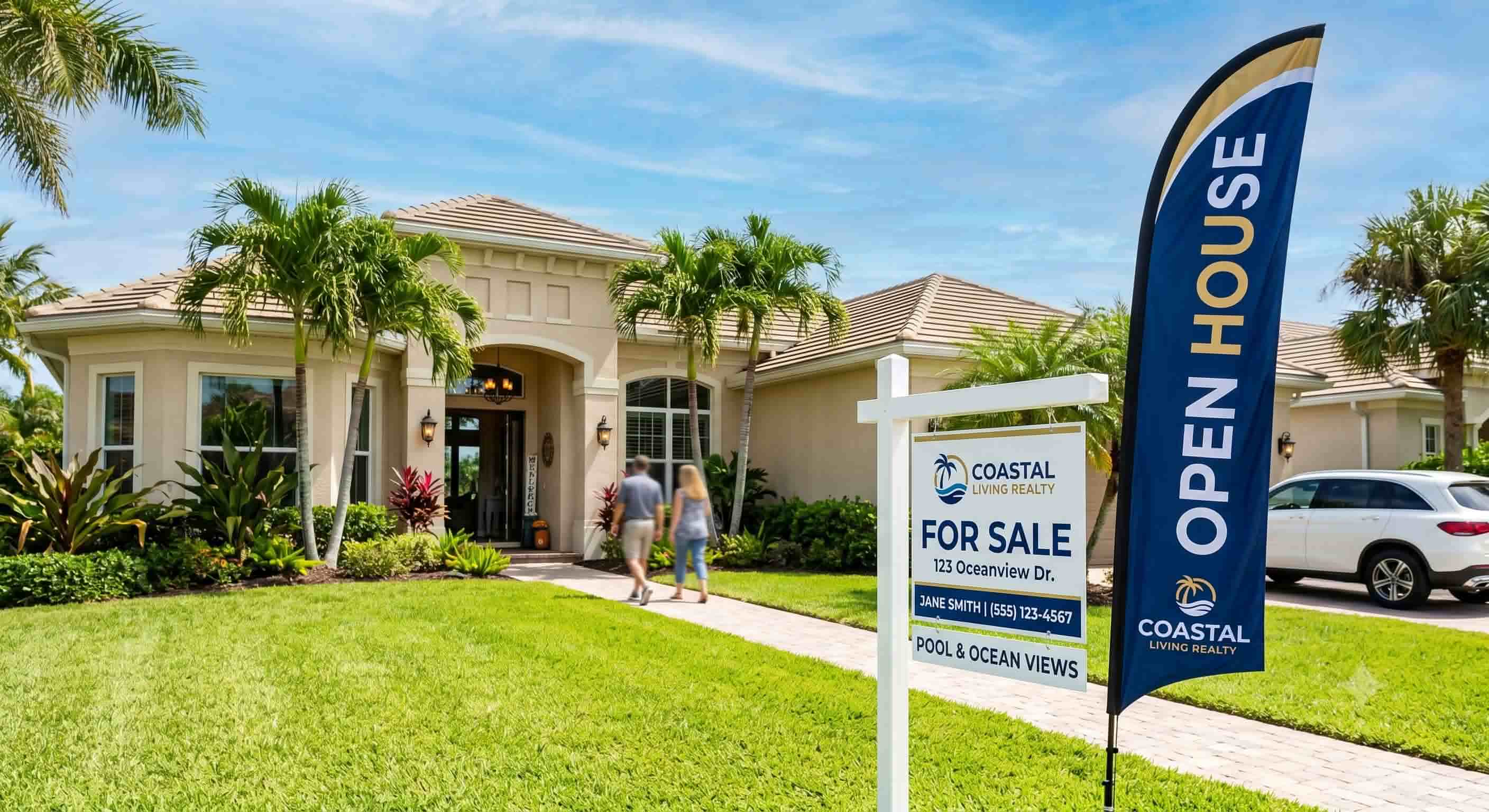
If you are a Real Estate agent or business owner in Florida, your outdoor signs are your most active salespeople. They work 24/7 on the curbside. However, Florida’s intense heat, heavy rains, and UV rays are brutal.
We have all seen them: warped yard signs, faded phone numbers, and rusty frames that make a premium property listing look neglected. When ordering your visual communication, choosing the right material matters just as much as your headshot.
But here is the hard truth: even the highest-quality materials need proper care to survive the climate.
Here is how to choose the right substrate, design effectively, and protect your investment.
1. Yard Signs: The 4mm Coroplast Standard
For quick listings, open houses, and directional signs, 4mm Coroplast is the industry standard. It is lightweight, waterproof, and budget-friendly.
Crucial Tip: Always ensure your yard signs are printed with the flutes (the hollow internal ribs) running vertically. If they are printed horizontally, you will not be able to insert the metal H-Stakes into the structure, and the sign will buckle in the wind.
Keep it Clean: The design must be clean and objective, highlighting only the primary information. There is no use in creating a cluttered, confusing sign; if people cannot read it at a glance, the marketing value is lost.
2. Aluminum Sandwich Boards (Dibond) for Long-Term Presence
If you need a sign for a commercial property, a long-term listing, or a permanent fence installation, step away from plastic. You need Aluminum Sandwich Boards (Dibond).
Constructed with two outer sheets of aluminum and a solid polyethylene core, these 1/8” (3mm) panels will not warp, crack, or melt under the sun.
Pro-Tip: Quality Materials Plus Smart Care Equal Maximum Lifespan
No printing material is 100% indestructible against severe weather. To make your signs last up to 3x longer, follow these professional maintenance rules:
Bring them inside during heavy storms: If the forecast predicts torrential rains or severe thunderstorms, pull your Yard Signs and A-frames inside. Constant high winds loosen ground stakes and put unnecessary stress on the substrates.
Rotate your signs: If a sign faces direct afternoon sun day after day, give it a break or rotate its position when possible to prevent uneven UV exposure.
Clean them gently: Wipe your aluminum or acrylic signs down with a damp microfiber cloth. Avoid harsh chemical cleaners that can degrade the protective UV coatings over time.
3. High-Resolution Text: The Visibility Check
A driver has only a few seconds to capture your information from the road. If the graphic file uses a low-resolution logo or compressed text, the details will look blurry from a distance, making it harder to read.
Before sending any sign to production, Touch Print performs a manual legibility check. We make sure the contrast is sharp and the file resolution is clean enough to be read clearly from across the street.
Investing in outdoor signage is about balancing material quality with practical maintenance and clean design. When these elements align, your signs work exactly as intended, protecting your brand image and bringing in clients naturally.
By Nadia Borralho. Journalist, expert in print curation and production with over 20 years of experience. Based in Florida, providing specialized print curation since 2016.