
Choosing the Right Materials for Your Indoor Business Signage
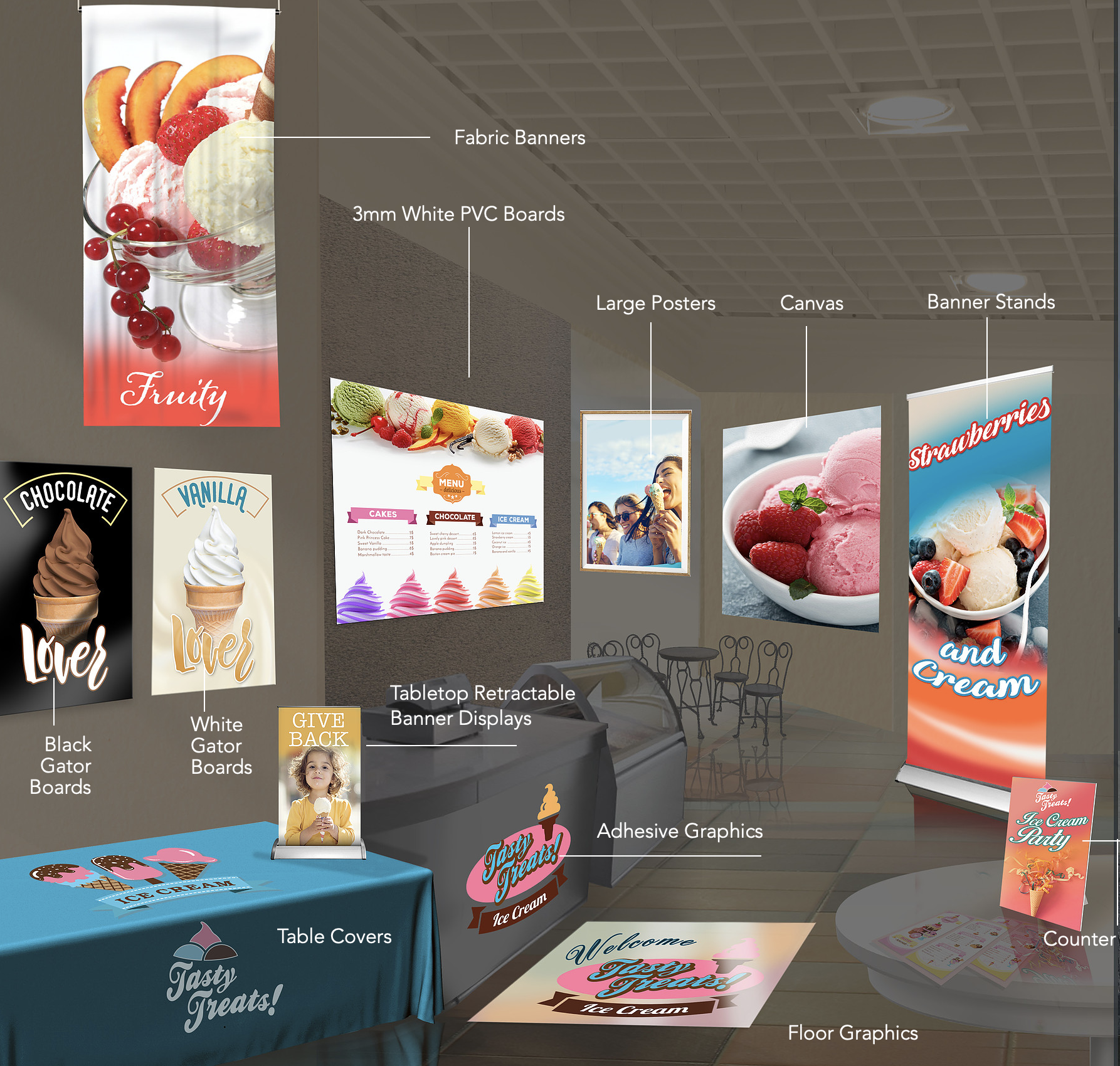
Walk into any successful retail store or restaurant, and you will notice their signs blend perfectly with the environment. The secret lies in selecting the correct substrate for each specific area. Indoor signage needs to balance print quality, durability, and a clean aesthetic. This guide breaks down the best materials to upgrade your indoor business signage and transform your interior brand experience.
Why Substrate Selection Dictates Your Indoor Business Signage Success
In my 20 years of working in print curation and production across Florida, I have seen brilliant graphic designs completely ruined by poor material choices. A common mistake is assuming that indoor conditions are forgiving. While you don’t have to fight the blistering sun or heavy tropical downpours inside an air-conditioned showroom, you do have to deal with intense overhead LED lighting, foot traffic, and high-frequency handling.
If you pick a material with the wrong finish, your customers will see nothing but a blinding glare from your ceiling spotlights. If you choose a substrate that cannot handle ambient humidity, your beautiful wall menu will start to sag within a single season. Choosing your physical medium matters just as much as your brand colors.
Placing signage indoors means your audience interacts with it from arm’s length. On a highway billboard, a small scratch or an uneven texture disappears. Up close in a reception area or at a trade show booth, those tiny imperfections stand out immediately and make a business look uncoordinated.
Rigid Boards: 3mm PVC vs. Gator Board
When you need flat, rigid displays for walls, menus, or freestanding inserts, two primary materials dominate the professional printing space. They look similar at a casual glance, but their internal engineering makes them fit for completely different tasks.
3mm White PVC Boards
Expanded PVC is the absolute workhorse of retail and corporate interiors. It is a lightweight plastic sheet with a smooth, closed-cell structure that gives it excellent rigidity without adding heavy weight to your walls.
The 3mm thickness is the ideal sweet spot for most indoor applications. It is thick enough to remain completely flat when mounted, yet thin enough to look sleek and modern.
The real magic of expanded PVC is its natural matte finish. It absorbs bright overhead light instead of reflecting it. This ensures that your text, pricing tables, or directional indicators remain perfectly legible from any angle in the room.
I recommend 3mm PVC for:
- Permanent wall-mounted menu boards.
- Directional and wayfinding signs in hallways.
- Decorative wall panels and corporate timeline displays.
Avoid using ultra-thin 1mm or 2mm PVC for larger signs. They are too flexible, meaning any slight bump or wave in your drywall will cause the plastic to ripple, exposing every single flaw in your wall surface.
Gator Board: The Anti-Warping Champion
Many business owners confuse Gator Board with standard foam core. Skip the cheap foam core entirely. Standard foam core is made of a soft foam center sandwiched between two layers of basic paper. It acts like a sponge for humidity, causing the edges to curl and warp within weeks.
Gator Board uses a much denser, heavy-duty polystyrene core. More importantly, its outer layers are made of a wood-fiber veneer impregnated with plastic resin. This creates an incredibly tough surface that resists scratching, denting, and warping.
If you are setting up signs that need to stand on their own, such as rigid vertical posters or structural displays, choose Gator Board. The black version is particularly excellent for high-end boutique environments. The dark core eliminates the raw white edge that you normally see on cut plastics, giving your final piece a clean, framed appearance without the added cost of an actual frame.
Maximizing Unused Space with Table Covers and Floor Graphics
When floor space or wall real estate is limited, you have to look at alternative surfaces. Your tables, counters, and floors are premium advertising spaces that usually go completely ignored.
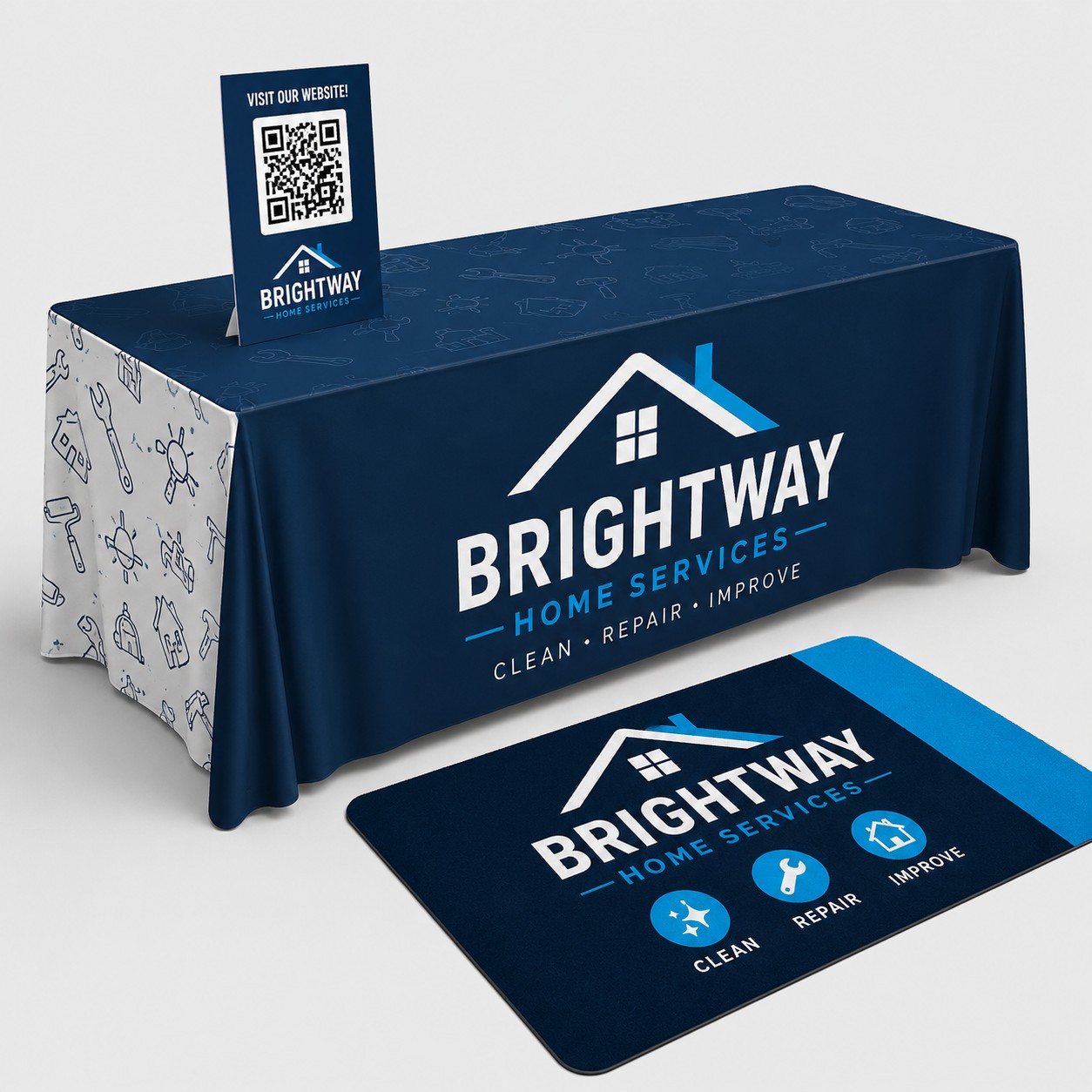
Table Covers (Table Throws)
If you run pop-up events, trade show booths, or interactive tasting stations, your table is your primary point of contact. Throwing a cheap, wrinkled plastic tablecloth over your station instantly cheapens your product.
Custom fabric table covers drape elegantly over standard folding tables, hiding ugly metal legs and providing a massive canvas for your branding. A high-quality polyester throw can be washed, folded, and reused hundreds of times without losing its vibrant color saturation. As seen in our sample setup above, a well-fitted cover creates a clean, block-like structure that anchors your entire promotional space.
Rigid Counter Signs and QR Codes
Keeping your messaging right at eye level is essential when clients approach your counter. A small, vertical rigid sign placed directly on your tabletop acts as a bridge between your physical space and your digital presence.
Using these small displays to showcase a prominent QR code allows customers to browse your full catalog, join a loyalty program, or pay digitally while they wait. It keeps the transaction smooth and interactive without cluttering your physical counter with heavy binders or loose paper flyers.
Floor Graphics
Floor graphics are brilliant tools for directing foot traffic, managing lines at the register, or highlighting a specific seasonal promotion. However, this is an area where safety must come before aesthetics.
Never use standard vinyl wrap material on a floor. Standard vinyl becomes slick when wet, creating a massive liability for slip-and-fall accidents if clients walk in from a rainy afternoon.
Professional floor graphics require a multi-layer system:
- High-tack adhesive vinyl: A specialized base layer that molds into the microscopic texture of tile, wood, or polished concrete without shifting under heavy foot traffic.
- Certified slip-resistant lamination: A thick, rugged top layer with an aggressive texture that provides traction for shoes.
When ordering floor graphics, make sure the materials meet official safety certifications. Organizations like the International Organization for Standardization (ISO) establish the foundational standards for testing material limits, helping manufacturers ensure these graphic films don’t become a workplace hazard under normal commercial traffic.
Quick Material Reference Grid
| Substrato | Uso Principal | Acabamento de Superfície | Nível de Durabilidade |
|---|---|---|---|
| PVC Expandido 3mm | Menus de parede e placas direcionais. | Totalmente fosco, liso. | Alta (não deforma em paredes). |
| Gator Board | Displays de balcão e totens leves. | Rígido, miolo denso de madeira. | Excellent (altíssima resistência à torção). |
| Table Covers (Tecido) | Mesas de atendimento e feiras. | Tecido fosco maleável. | Longa (totalmente lavável). |
| Gráficos de Piso | Controle de filas e caminhos de loja. | Texturizado, antiderrapante. | Média (6 a 12 meses sob tráfego). |
The Technical Details That Protect Your Print Budget
The most expensive material in the world can’t save your presentation if the graphic production file is set up incorrectly. The single biggest issue we encounter during pre-press checkups is file resolution.
Outdoor billboard graphics can get away with lower resolutions because people view them from hundreds of feet away. Indoor signage is completely different. Your clients will look at your menus, counter displays, and table throws from a distance of less than three feet. Every single text edge, logo curve, and image detail needs to be pin-sharp.
Always ensure your design files are saved at a minimum of 150 to 300 DPI at full output scale. If your designer sends a compressed web file, your final printed board will look pixelated and blurry, instantly destroying your professional credibility.
Additionally, always double-check your color workspace. Ensure your files are exported using the CMYK color model rather than the RGB space used for digital phone and computer screens. Converting your files early prevents unexpected color shifts, keeping your corporate navy blues from turning into a strange shade of purple when the ink hits the substrate.
Ready to transform your retail space or upcoming trade show booth? Contact our technical production team at Touch Printing Services today to select the perfect indoor materials for your project.
By Nadia Borralho. Journalist, expert in print curation and production with over 20 years of experience. Based in Florida, providing specialized print curation since 2016.